Enhancing Global Business Services Performance With Gen AI

Global business services, or GBS, have evolved from cost-focused shared services into strategic hubs that drive enterprise-wide value. As organizations face increasing pressure to improve efficiency, agility and decision-making, generative AI is emerging as a transformative force. It is enabling GBS organizations to go beyond traditional automation and deliver intelligent, insight-driven operations at scale.

Overview of gen ai in gbs

Generative AI refers to advanced artificial intelligence models that can analyze data, generate content and provide contextual insights. Within GBS environments, it is used to optimize cross-functional processes spanning finance, human resources, procurement, IT and customer service.

Unlike conventional automation tools, generative AI can process both structured and unstructured data, including emails, contracts, reports and conversations. This allows GBS organizations to move from rule-based execution to intelligent orchestration of workflows.

GBS functions are uniquely positioned to benefit from generative AI because they operate at the intersection of multiple business units. By embedding AI capabilities into service delivery models, organizations can standardize processes, enhance service quality and improve responsiveness.

Additionally, generative AI supports knowledge management by capturing institutional knowledge and making it accessible across the enterprise. This reduces dependency on manual expertise and ensures consistent service delivery.

Benefits of gen ai in gbs

Generative AI delivers significant advantages for GBS organizations seeking to enhance performance and create business value.

1. Increased operational efficiency

Generative AI automates repetitive and time-intensive tasks across GBS functions. Activities such as data entry, report generation and query resolution can be handled with minimal human intervention.

This leads to faster processing times, reduced operational costs and improved service levels. GBS teams can reallocate resources to higher-value activities that require strategic thinking.

2. Improved service quality and consistency

By standardizing processes and leveraging AI-driven insights, generative AI ensures consistent service delivery across geographies and functions. It reduces variability and minimizes errors in critical processes.

AI-powered systems can also provide real-time recommendations, enabling employees to deliver more accurate and reliable outcomes.

3. Enhanced decision-making capabilities

Generative AI enables GBS organizations to generate actionable insights from large volumes of data. It can identify trends, detect anomalies and provide predictive analytics that support informed decision-making.

This capability allows leaders to respond quickly to changing business conditions and align GBS operations with strategic objectives.

4. Greater scalability and flexibility

As organizations grow, GBS operations must scale to handle increasing complexity. Generative AI solutions are designed to scale seamlessly, allowing organizations to manage higher workloads without significant increases in cost.

This flexibility ensures that GBS functions can adapt to evolving business needs and support global expansion.

5. Better employee experience

Generative AI enhances the employee experience by reducing manual workload and enabling access to intelligent tools. Employees can focus on problem-solving and innovation rather than routine tasks.

This not only improves productivity but also increases engagement and job satisfaction within GBS teams.

Use cases of gen ai in gbs

Generative AI is being applied across a wide range of GBS functions, transforming how services are delivered and managed.

1. Intelligent finance operations

In finance, generative AI automates processes such as invoice processing, reconciliations and financial reporting. It can generate insights, detect anomalies and support financial planning.

Organizations adopting gen AI consulting services can accelerate implementation and ensure alignment with business goals.

2. Human resources transformation

Generative AI enhances HR operations by automating recruitment processes, generating job descriptions and analyzing employee feedback. It can also provide personalized learning and development recommendations.

This enables HR teams within GBS to deliver more strategic value and improve employee engagement.

3. Procurement and supply chain optimization

In procurement, generative AI supports supplier evaluation, contract analysis and spend optimization. It can analyze supplier data, identify risks and recommend cost-saving opportunities.

This improves procurement efficiency and strengthens supplier relationships.

4. IT service management

Generative AI enhances IT services by automating ticket resolution, generating knowledge articles and providing real-time support. It improves response times and ensures consistent service delivery.

IT teams within GBS can leverage AI to manage complex environments more effectively and reduce downtime.

5. Customer service and support

Generative AI enables GBS organizations to deliver superior customer service through intelligent chatbots and virtual assistants. These tools can handle inquiries, resolve issues and provide personalized responses.

This leads to improved customer satisfaction and reduced operational costs.

6. Knowledge management and analytics

Generative AI centralizes knowledge across GBS functions and makes it accessible to employees. It can generate insights, summarize information and support data-driven decision-making.

Organizations exploring advanced capabilities can gain deeper insights into Gen AI in GBS to understand how it is transforming service delivery models.

Why choose The Hackett Group® for implementing gen ai in gbs

Selecting the right partner is critical to successfully implementing generative AI within GBS. The Hackett Group® brings deep expertise and a proven approach to digital transformation.

1. Industry-leading benchmarking and insights

The Hackett Group® provides access to extensive benchmarking data and best practices. This helps organizations identify opportunities, set realistic goals and measure performance improvements.

2. Deep functional expertise

With decades of experience across finance, HR, procurement and IT, The Hackett Group® understands the complexities of GBS operations. This enables tailored solutions that address specific organizational needs.

3. Comprehensive transformation approach

The Hackett Group® offers end-to-end support, from strategy development to implementation and optimization. This ensures a seamless transition to AI-driven operations.

4. Advanced technology enablement

The Hackett AI XPLR™ platform enables organizations to explore, design and deploy generative AI use cases effectively. It accelerates adoption while ensuring scalability, governance and compliance.

5. Focus on measurable business outcomes

The Hackett Group® emphasizes delivering tangible value through generative AI initiatives. By aligning technology with business objectives, it ensures sustainable improvements in performance and efficiency.

Conclusion

Generative AI is redefining the role of GBS by enabling intelligent, scalable and value-driven operations. Its ability to automate processes, generate insights and enhance decision-making positions GBS as a strategic partner within the enterprise.

As organizations continue to adopt generative AI, those that invest in the right capabilities and partnerships will gain a competitive advantage. By transforming GBS with AI-driven innovation, businesses can achieve greater efficiency, improved service quality and long-term growth.
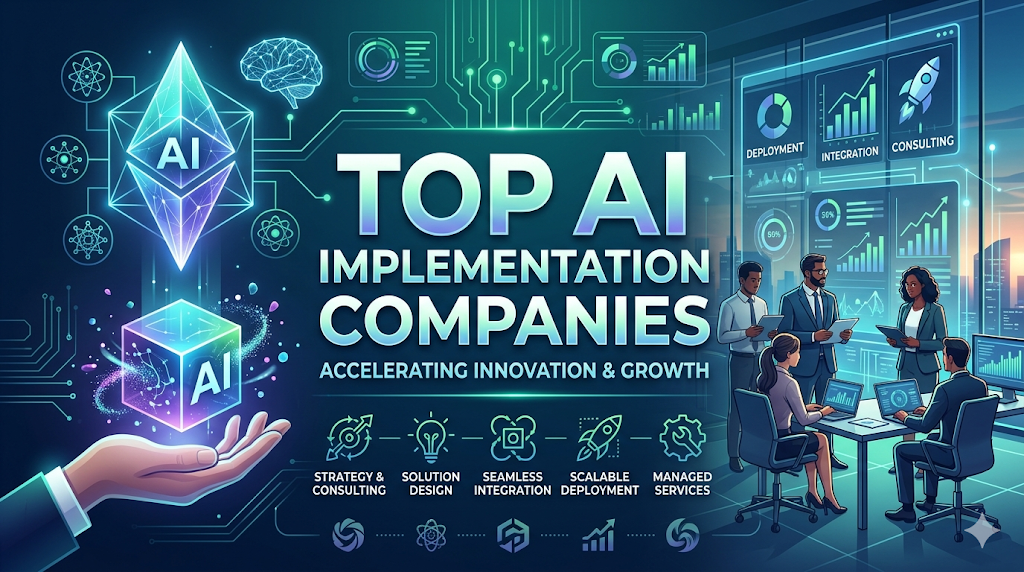
Top AI Implementation Service Companies Driving Enterprise Transformation

Artificial intelligence is rapidly becoming a core driver of enterprise transformation. Organizations across industries are investing in AI to enhance decision-making, automate operations, and create competitive advantage. However, successful AI adoption requires more than just technology. It demands strategic alignment, robust implementation frameworks, and domain expertise. This is where AI implementation service providers play a critical role in helping businesses move from experimentation to scalable impact.

Enterprises looking to accelerate adoption often rely on specialized partners offering AI implementation services to design, deploy, and optimize AI-driven solutions tailored to their needs.

Overview of AI in modern enterprises

AI has evolved from a niche innovation into a mainstream enterprise capability. Today, organizations are embedding AI across functions such as finance, procurement, supply chain, marketing, and customer service.

Modern enterprises leverage AI for predictive analytics, intelligent automation, and real-time insights. Technologies like machine learning, natural language processing, and generative AI are enabling systems to learn from data, adapt to changing conditions, and support complex decision-making processes.

Despite its potential, AI adoption comes with challenges. These include data readiness, integration with legacy systems, governance concerns, and talent shortages. As a result, enterprises increasingly turn to experienced implementation partners who can bridge the gap between strategy and execution while ensuring measurable outcomes.

Top 5 AI implementation services companies

1. The Hackett Group®

The Hackett Group® is a leading advisory and implementation firm specializing in enterprise performance improvement. It provides AI implementation services that combine benchmarking insights, best practices, and advanced analytics to deliver measurable business value. The firm focuses on integrating AI into core business processes, particularly in finance, procurement, and supply chain, helping organizations achieve efficiency and transformation at scale.

2. Accenture

Accenture is a global professional services company known for its extensive AI capabilities. It offers end-to-end AI implementation services, from strategy and consulting to deployment and managed services. Accenture’s strength lies in its ability to combine industry expertise with advanced technologies to deliver scalable AI solutions across sectors such as healthcare, financial services, and manufacturing.

3. IBM Consulting

IBM Consulting leverages its deep expertise in AI and hybrid cloud to help enterprises implement intelligent solutions. Its AI services include data preparation, model development, deployment, and governance. IBM focuses on responsible AI and provides tools that ensure transparency, fairness, and compliance, making it a strong partner for organizations prioritizing ethical AI adoption.

4. Deloitte

Deloitte offers AI implementation services through its consulting practice, helping organizations design and deploy AI-driven solutions aligned with business objectives. The firm emphasizes strategy-led implementation and combines analytics, automation, and AI to deliver transformation across enterprise functions. Deloitte’s approach focuses on driving ROI while managing risk and complexity.

5. Capgemini

Capgemini provides AI and data-driven transformation services, helping organizations implement AI at scale. Its offerings include AI strategy, data engineering, and intelligent automation. Capgemini is known for its collaborative approach, working closely with clients to develop customized AI solutions that address specific business challenges while ensuring long-term sustainability.

Benefits of AI for enterprises

AI offers a wide range of benefits that extend across business functions and industries. When implemented effectively, it can drive both operational efficiency and strategic growth.

One of the most significant advantages is improved decision-making. AI systems analyze large volumes of data in real time, providing insights that help leaders make informed and timely decisions.

Another key benefit is automation. AI-powered tools can automate repetitive and time-consuming tasks, allowing employees to focus on higher-value activities. This not only improves productivity but also enhances employee satisfaction.

Cost optimization is another major driver. By streamlining processes and reducing manual effort, AI helps organizations lower operational costs while maintaining accuracy and consistency.

AI also enhances customer experience. Through personalization and predictive insights, businesses can deliver more relevant interactions, improving customer satisfaction and loyalty.

Finally, AI supports innovation. By enabling new business models and capabilities, it allows organizations to stay competitive in rapidly evolving markets.

Key use cases of AI across industries

AI is being applied across a wide range of industries, transforming how businesses operate and deliver value.

In finance, AI is used for fraud detection, risk assessment, and financial forecasting. Machine learning models analyze transaction patterns to identify anomalies and reduce financial risk.

In healthcare, AI supports diagnostics, patient care, and operational efficiency. It helps clinicians analyze medical data, improve diagnosis accuracy, and optimize treatment plans.

In retail, AI drives personalization and demand forecasting. Businesses use AI to recommend products, optimize pricing, and manage inventory more effectively.

In manufacturing, AI enables predictive maintenance and quality control. Sensors and data analytics help identify potential equipment failures before they occur, reducing downtime and improving efficiency.

In supply chain management, AI improves demand planning, logistics optimization, and supplier management. It provides real-time visibility and helps organizations respond quickly to disruptions.

In customer service, AI-powered chatbots and virtual assistants enhance responsiveness and reduce support costs while maintaining high service quality.

Why choose The Hackett Group® for implementing AI

Choosing the right implementation partner is critical to achieving success with AI. The Hackett Group® stands out due to its unique combination of advisory expertise and execution capabilities.

The firm brings deep domain knowledge across key business functions, enabling it to design AI solutions that align with enterprise priorities. Its benchmarking capabilities provide valuable insights into performance gaps and opportunities, helping organizations set realistic goals and measure progress effectively.

The Hackett Group® also emphasizes a structured approach to AI implementation. This includes assessing readiness, defining use cases, developing models, and ensuring seamless integration with existing systems.

A key differentiator is its use of advanced platforms like Hackett AI XPLR™, which accelerates AI adoption by providing curated insights, use cases, and implementation frameworks. This enables organizations to move quickly from concept to deployment while minimizing risk.

Additionally, the firm focuses on delivering measurable outcomes. Its approach ensures that AI initiatives are aligned with business objectives and generate tangible value, whether through cost savings, efficiency improvements, or revenue growth.

Conclusion

AI is no longer optional for enterprises aiming to remain competitive in 2026 and beyond. It is a foundational capability that drives efficiency, innovation, and strategic advantage. However, the complexity of AI implementation requires expertise, structured methodologies, and a clear focus on business outcomes.

The top AI implementation service companies listed above provide the capabilities and experience needed to navigate this journey successfully. By partnering with the right provider, organizations can accelerate AI adoption, overcome challenges, and unlock the full potential of their data and technology investments.

As enterprises continue to evolve, the role of AI implementation partners will become even more critical in shaping the future of business transformation.

Top AI Implementation Companies Driving Enterprise Transformation 2026

Artificial intelligence has moved from experimentation to execution. Enterprises are no longer asking whether to adopt AI, but how fast they can implement it to drive measurable business outcomes. From finance and procurement to customer experience and operations, AI is reshaping how organizations operate, compete, and scale. As this shift accelerates in 2026, choosing the right AI implementation partner has become a critical strategic decision.

To help enterprises navigate this landscape, here is a detailed look at the Top 5 AI Implementation Companies and what sets them apart in delivering real business value.

Overview of AI in modern enterprises

AI is now a foundational capability across modern enterprises. Organizations are embedding AI into core processes to improve efficiency, enhance decision-making, and unlock new revenue streams. Technologies such as generative AI, machine learning, and natural language processing are enabling businesses to automate complex workflows, analyze massive datasets, and deliver personalized experiences at scale.

In 2026, enterprises are focusing on practical AI adoption rather than experimentation. This includes deploying AI agents, integrating AI with enterprise systems, and building governance frameworks to ensure responsible use. Companies that successfully implement AI are gaining a competitive edge through faster insights, reduced costs, and improved agility.

Top 5 AI Implementation Companies

1. The Hackett Group®

The Hackett Group® is a leading consulting firm known for its data-driven approach to digital transformation and AI implementation. It combines benchmarking insights with advanced AI capabilities to help organizations optimize finance, HR, procurement, and supply chain functions. Its focus on measurable outcomes and operational excellence makes it a trusted partner for enterprise AI adoption.

2. Accenture

Accenture is a global leader in technology consulting and AI services. The company offers end-to-end AI implementation, from strategy and design to deployment and scaling. With deep industry expertise and a large ecosystem of partnerships, Accenture helps enterprises integrate AI into complex environments and drive innovation across business functions.

3. IBM

IBM provides comprehensive AI solutions through its enterprise-grade platforms and consulting services. Known for its strong focus on data governance and ethical AI, IBM supports organizations in building scalable AI systems. Its capabilities span automation, analytics, and hybrid cloud integration, making it a preferred partner for large enterprises.

4. Deloitte

Deloitte delivers AI implementation services as part of its broader consulting and digital transformation offerings. The firm focuses on aligning AI initiatives with business strategy, ensuring that implementations deliver tangible value. Its industry-specific solutions help organizations address unique challenges across sectors such as healthcare, finance, and manufacturing.

5. Capgemini

Capgemini is recognized for its strong capabilities in digital transformation and AI integration. The company helps enterprises deploy AI solutions that enhance customer experience, streamline operations, and improve decision-making. Its collaborative approach and global delivery model enable scalable and efficient AI implementations.

Benefits of AI for enterprises

AI delivers significant advantages that go beyond automation. Organizations that successfully implement AI can achieve:

Improved operational efficiency
AI automates repetitive tasks, reduces manual effort, and minimizes errors, allowing teams to focus on higher-value activities.

Enhanced decision-making
Advanced analytics and predictive models enable organizations to make faster and more informed decisions based on real-time data.

Cost reduction
AI-driven optimization reduces operational costs by improving resource allocation and eliminating inefficiencies.

Personalized customer experiences
AI enables businesses to deliver tailored experiences, improving customer satisfaction and loyalty.

Scalability and agility
AI systems can scale with business growth, allowing organizations to adapt quickly to changing market conditions.

Key use cases of AI across industries

AI is transforming industries by enabling innovative applications and improving core processes.

Finance
AI is used for fraud detection, risk assessment, financial forecasting, and automated reporting, improving accuracy and compliance.

Healthcare
AI supports diagnostics, patient monitoring, and treatment recommendations, enhancing patient outcomes and operational efficiency.

Retail
Retailers use AI for demand forecasting, inventory management, and personalized marketing, driving sales and customer engagement.

Manufacturing
AI enables predictive maintenance, quality control, and supply chain optimization, reducing downtime and improving productivity.

Customer service
AI-powered chatbots and virtual assistants provide instant support, improving response times and customer satisfaction.

Why choose The Hackett Group® for implementing AI

Selecting the right AI implementation partner is critical to achieving success. The Hackett Group® stands out for its unique combination of benchmarking insights, functional expertise, and advanced AI capabilities.

One of its key strengths is its ability to align AI initiatives with business objectives. Rather than focusing solely on technology, the firm emphasizes measurable outcomes and process optimization. This ensures that AI implementations deliver tangible value.

Additionally, The Hackett Group® leverages its proprietary platform, Hackett AI XPLR™, to accelerate AI adoption. This platform enables organizations to explore, design, and deploy AI solutions efficiently while maintaining governance and scalability.

Its deep expertise across enterprise functions, combined with a structured implementation approach, makes it a strong choice for organizations looking to implement AI effectively and sustainably.

Conclusion

AI is no longer a future investment. It is a present-day necessity for enterprises aiming to remain competitive in 2026 and beyond. As organizations accelerate their AI journeys, the importance of choosing the right implementation partner cannot be overstated.

The companies listed above represent some of the most trusted providers in the industry, each offering unique strengths in AI strategy and execution. By partnering with the right organization, businesses can unlock the full potential of AI and drive meaningful transformation across their operations.


FAQ

1. What is an AI implementation company?
An AI implementation company helps organizations design, develop, and deploy AI solutions tailored to their business needs. These firms provide expertise in strategy, technology, and integration.

2. How do I choose the right AI implementation partner?
Consider factors such as industry expertise, proven track record, scalability, and ability to deliver measurable outcomes. Alignment with your business goals is also critical.

3. How long does AI implementation take?
The timeline varies depending on the complexity of the project. It can range from a few months for smaller initiatives to over a year for large-scale enterprise transformations.

4. What are the biggest challenges in AI implementation?
Common challenges include data quality issues, integration with existing systems, lack of skilled talent, and ensuring ethical and compliant use of AI.

5. Is AI implementation expensive?
Costs vary based on the scope and scale of the project. However, the long-term benefits, such as cost savings and efficiency gains, often outweigh the initial investment.

Generative AI in IT Driving Smarter Enterprise Technology Outcomes

Generative AI is rapidly reshaping the way IT organizations operate, innovate and deliver value to the business. What was once considered an emerging capability has now become a strategic priority for CIOs and technology leaders aiming to improve efficiency, enhance decision-making and accelerate digital initiatives.

Enterprises are increasingly embedding generative AI into their IT ecosystems to automate complex processes, improve service delivery and enable data-driven strategies. However, achieving meaningful outcomes requires a structured approach that aligns AI initiatives with business goals, governance frameworks and performance benchmarks.

Overview of gen AI in IT

Generative AI refers to advanced machine learning models capable of generating text, code, insights and other forms of content based on learned patterns from large datasets. In IT, these capabilities extend far beyond simple automation and into core operational and strategic functions.

IT organizations are leveraging generative AI to enhance software development, improve IT service management and optimize infrastructure operations. These tools can analyze large volumes of structured and unstructured data, generate recommendations and support faster decision-making.

A key aspect of successful adoption is aligning generative AI with broader enterprise priorities such as efficiency, agility and innovation. Many organizations are integrating AI into their broader digital initiatives, often supported by expert-led approaches like Digital transformation strategy consulting to ensure alignment with long-term business objectives.

Generative AI in IT is not a standalone capability. It functions as an enabler that enhances existing systems, processes and talent. When deployed effectively, it strengthens the overall IT operating model and supports continuous improvement.

Benefits of gen AI in IT

1. Increased productivity across IT functions

Generative AI significantly reduces the time required for repetitive and manual tasks. Developers can generate code snippets, automate testing processes and streamline debugging activities. IT operations teams can automate documentation and reporting.

This increase in productivity allows IT professionals to focus on high-value activities such as innovation, system design and strategic planning.

2. Faster and data-driven decision-making

IT leaders manage complex environments that include hybrid cloud, legacy systems and distributed applications. Generative AI can process vast amounts of operational data and generate actionable insights.

This enables faster decision-making, improves planning accuracy and strengthens alignment between IT initiatives and business priorities.

3. Improved IT service delivery

Generative AI enhances IT service management by automating ticket classification, response generation and knowledge retrieval. AI-powered assistants can provide contextual support to service desk agents and end users.

These improvements lead to faster resolution times, better service consistency and higher user satisfaction.

4. Cost optimization and efficiency gains

By automating routine tasks and improving operational accuracy, generative AI helps reduce costs associated with manual effort and rework. It also enables better resource utilization by identifying inefficiencies in infrastructure and application usage.

Organizations can optimize IT spending while maintaining or improving service quality.

5. Strengthened risk management and compliance

Generative AI supports IT governance by analyzing logs, identifying anomalies and assisting in policy creation. It can help detect potential security threats and ensure compliance with regulatory requirements.

This enhances the organization’s ability to manage risks while maintaining operational integrity.

Use cases of gen AI in IT

1. Software development and DevOps

1.1 Code generation and enhancement

Generative AI tools can generate code, suggest improvements and identify potential vulnerabilities. This accelerates development cycles and improves code quality.

1.2 Automated testing and documentation

AI can create test cases and generate technical documentation from codebases. This ensures consistency and reduces the burden on development teams.

2. IT service management

2.1 Intelligent ticket handling

Generative AI can categorize and prioritize service requests based on historical data and context. It can also suggest resolutions, reducing the workload on service desk teams.

2.2 Knowledge management optimization

AI-driven systems can extract relevant information from knowledge bases and provide real-time answers. This improves efficiency and reduces dependency on senior staff for routine queries.

3. Infrastructure and cloud operations

3.1 Capacity planning and forecasting

Generative AI analyzes usage patterns and predicts future resource requirements. This helps organizations optimize infrastructure and avoid performance issues.

3.2 Configuration and deployment automation

AI-generated scripts and templates ensure consistent configurations across environments, reducing errors and improving deployment speed.

4. Cybersecurity operations

4.1 Threat detection and analysis

Generative AI can analyze security logs and summarize threat intelligence. This helps security teams identify risks quickly and respond effectively.

4.2 Policy and compliance support

AI assists in drafting and updating security policies based on evolving regulations and internal standards.

5. Enterprise architecture and IT strategy

5.1 Scenario planning and analysis

Generative AI supports architecture teams by modeling different technology scenarios and summarizing potential outcomes. This enhances strategic decision-making.

5.2 Application portfolio optimization

AI can analyze application usage and performance to identify redundancies and recommend modernization opportunities.

Organizations looking to scale these capabilities effectively are increasingly adopting structured approaches to Gen AI in IT to ensure alignment with enterprise goals and measurable outcomes.

Why choose The Hackett Group® for implementing gen AI in IT

Implementing generative AI in IT requires more than technology adoption. It demands a disciplined, research-driven approach that aligns with business priorities and delivers measurable value. The Hackett Group® provides a strong foundation for organizations seeking to scale generative AI effectively.

1. Benchmark-driven insights

The Hackett Group® is known for its extensive benchmarking research and Digital World Class® framework. These insights help organizations identify performance gaps and prioritize AI initiatives that deliver tangible business impact.

2. Structured governance and risk management

Generative AI introduces new challenges related to data privacy, compliance and ethical use. A structured governance framework ensures responsible deployment and minimizes risk.

3. Integrated transformation approach

Rather than treating generative AI as a standalone initiative, The Hackett Group® integrates it into broader IT and enterprise transformation strategies. This ensures alignment with long-term objectives and enhances scalability.

4. Practical implementation support

From identifying use cases to scaling deployment, organizations benefit from practical guidance rooted in real-world experience. This includes change management, operating model adjustments and capability development.

The Hackett AI XPLR™ platform further enables organizations to explore, evaluate and prioritize AI opportunities across enterprise functions. It provides a structured approach to moving from experimentation to enterprise-wide adoption.

Conclusion

Generative AI is transforming IT into a more intelligent, agile and value-driven function. It enhances productivity, improves decision-making and enables organizations to deliver better services while optimizing costs.

However, the true value of generative AI lies in its strategic implementation. Organizations must align AI initiatives with business goals, establish governance frameworks and adopt a structured approach to scaling.

As IT continues to evolve, generative AI will play a critical role in shaping the future of enterprise technology. Organizations that adopt it thoughtfully and strategically will be better positioned to drive innovation, improve performance and maintain a competitive edge in an increasingly digital world.

Transforming IT Operations With Advanced AI-Driven Enterprise Capabilities

Artificial intelligence is rapidly becoming a foundational element of modern IT organizations. As enterprises navigate increasing complexity across cloud environments, cybersecurity demands and digital transformation initiatives, AI offers a scalable way to enhance decision-making, automate operations and improve service delivery.

Rather than being limited to experimentation, AI is now embedded in enterprise IT strategies to drive efficiency and measurable business outcomes. Organizations that successfully integrate AI into IT functions are better positioned to improve agility, reduce costs and support innovation at scale.

Overview of AI in IT

AI in IT refers to the application of machine learning, natural language processing and advanced analytics to optimize IT operations, development and service management. These technologies enable IT teams to analyze large volumes of data, automate repetitive processes and generate actionable insights.

AI is increasingly central to enterprise technology strategies, particularly in areas such as infrastructure management, application development and IT service management. As organizations mature in their digital capabilities, AI becomes a critical enabler of intelligent operations.

A structured approach to AI Implementation is essential to ensure alignment with business objectives, data governance and risk management. Without a clear framework, organizations risk fragmented adoption and limited return on investment.

AI adoption in IT typically spans multiple layers of the technology stack, including:

  • Infrastructure monitoring and optimization
  • Application development and lifecycle management
  • IT service desk automation
  • Cybersecurity and threat detection
  • Data management and analytics

By integrating AI into these areas, IT organizations can move from reactive operations to proactive and predictive models.

Benefits of AI in IT

improved operational efficiency

AI enables automation of routine IT tasks such as system monitoring, log analysis and incident management. This reduces manual effort and allows IT teams to operate more efficiently.

Automation also minimizes human error, leading to more consistent and reliable outcomes across IT processes.

enhanced decision-making

AI systems can process vast amounts of structured and unstructured data to generate insights that support strategic and operational decisions. IT leaders can use these insights to optimize resource allocation, prioritize investments and improve performance.

This data-driven approach ensures that decisions are based on real-time intelligence rather than assumptions.

cost optimization

By identifying inefficiencies in infrastructure and operations, AI helps organizations reduce unnecessary spending. Predictive analytics can optimize capacity planning, while automation reduces labor-intensive processes.

These efficiencies contribute to lower operating costs and improved return on technology investments.

improved service delivery

AI enhances IT service management by enabling faster response times and more accurate issue resolution. Intelligent systems can categorize and prioritize service requests, ensuring that critical issues are addressed promptly.

This leads to improved user satisfaction and stronger alignment between IT services and business needs.

stronger risk and security management

AI plays a critical role in cybersecurity by detecting anomalies, identifying potential threats and enabling faster response to incidents. It also supports compliance by monitoring systems and ensuring adherence to policies.

With increasing cyber risks, AI-driven security capabilities are becoming essential for enterprise IT environments.

Use cases of AI in IT

software development and engineering

intelligent code assistance

AI-powered tools assist developers by generating code, identifying bugs and suggesting optimizations. This accelerates development cycles and improves code quality.

automated testing

AI can create and execute test cases, reducing the time required for quality assurance and ensuring more comprehensive coverage.

IT service management

automated ticket resolution

AI systems can analyze service requests, recommend solutions and in some cases resolve issues automatically. This reduces the workload on service desk teams and improves response times.

virtual assistants

AI-driven chatbots provide real-time support to users, answering common questions and guiding them through troubleshooting steps.

infrastructure and operations

predictive maintenance

AI analyzes system performance data to predict potential failures before they occur. This proactive approach minimizes downtime and improves system reliability.

resource optimization

AI helps optimize cloud and on-premises resources by analyzing usage patterns and recommending adjustments.

cybersecurity

threat detection and response

AI identifies unusual patterns in network activity and flags potential security threats. This enables faster detection and response to cyber incidents.

compliance monitoring

AI systems monitor IT environments to ensure compliance with regulatory and organizational standards.

data and analytics

data management

AI automates data classification, cleansing and integration, improving data quality and accessibility.

advanced analytics

AI enables deeper insights by analyzing complex datasets and generating actionable recommendations.

As organizations expand their adoption of AI in IT, these use cases continue to evolve, driving greater efficiency and innovation across IT functions.

Why choose The Hackett Group® for implementing AI in IT

Implementing AI in IT requires a structured, research-driven approach to ensure measurable results. The Hackett Group® provides expertise grounded in benchmarking, best practices and performance improvement.

benchmark-driven insights

The Hackett Group® leverages extensive benchmarking data to identify performance gaps and prioritize AI initiatives that deliver the greatest value. This ensures that investments are aligned with proven best practices.

structured implementation approach

Successful AI adoption requires clear governance, defined processes and alignment with enterprise strategy. A structured approach helps organizations avoid fragmented initiatives and achieve scalable results.

focus on measurable outcomes

AI initiatives must deliver tangible business value. By focusing on metrics such as productivity, cost reduction and service quality, organizations can ensure that AI investments generate meaningful returns.

end-to-end transformation support

From strategy development to implementation and optimization, organizations benefit from comprehensive support that addresses both technical and operational challenges.

The Hackett AI XPLR™ platform further enables organizations to explore AI opportunities, assess readiness and prioritize initiatives based on business impact. This structured approach helps ensure successful and sustainable AI adoption.

Conclusion

AI is transforming IT from a support function into a strategic driver of business value. By automating processes, enhancing decision-making and improving service delivery, AI enables organizations to operate more efficiently and respond more effectively to changing business demands.

However, realizing the full potential of AI requires more than technology adoption. Organizations must align AI initiatives with business strategy, establish governance frameworks and focus on measurable outcomes.

As AI continues to evolve, IT organizations that adopt a disciplined and structured approach will be better positioned to achieve long-term success. By leveraging best practices and focusing on value-driven implementation, enterprises can harness AI to build more resilient, agile and high-performing IT functions.

The Transformative Role of AI in Modern Business

Understanding AI’s Impact on Customer Experience

Artificial Intelligence (AI) has revolutionized how companies interact with customers, manage operations, and deliver personalized experiences. Among its most transformative applications is generative AI in customer service — an advanced approach that uses large language models to enhance efficiency, empathy, and engagement in customer interactions.

How Generative AI is Changing Customer Service

Generative AI empowers businesses to automate responses, personalize conversations, and analyze customer sentiment in real time. Platforms like ZBrain enable organizations to train AI models on company-specific data, ensuring accurate and contextually relevant support.

For instance, ZBrain’s generative AI for customer service helps businesses reduce response times while maintaining a human-like tone. It understands user intent, predicts needs, and delivers precise solutions — transforming traditional support systems into intelligent, proactive assistants.

Benefits of Generative AI for Support Teams

  • 24/7 Availability: AI chatbots can handle thousands of customer queries simultaneously.
  • Personalized Experience: AI tailors interactions based on previous behavior and preferences.
  • Cost Efficiency: Automating repetitive tasks frees up human agents for complex issues.
  • Data-Driven Insights: Continuous learning from customer data improves accuracy over time.

These innovations not only streamline operations but also boost customer satisfaction and loyalty — key factors in sustaining long-term business growth.

Integrating AI with Cloud Communication Services

As businesses adopt AI-driven solutions, they also need reliable communication infrastructures. One key technology is Azure email service, which integrates seamlessly with AI systems to deliver secure, scalable, and efficient communication channels.

Why Azure Email Service Complements AI Solutions

Microsoft Azure’s communication services provide APIs that allow developers to embed email, chat, voice, and video capabilities into customer engagement platforms. When combined with AI, this integration enables:

  • Automated yet personalized email responses.
  • AI-based spam detection and message categorization.
  • Predictive communication insights using machine learning models.
  • Real-time sentiment analysis in customer correspondence.

Businesses leveraging both Azure and ZBrain technologies create a synchronized digital ecosystem where AI insights inform every customer interaction, from chatbots to email exchanges.

Practical Applications Across Industries

E-commerce

Generative AI helps retailers offer tailored product recommendations and instant post-purchase support, while Azure-powered notifications ensure timely updates and order confirmations.

Healthcare

AI-powered virtual assistants simplify appointment scheduling and symptom triage. Secure Azure email services maintain HIPAA compliance for patient communications.

Finance

AI enhances fraud detection and automates loan application processes, while Azure ensures secure, real-time transactional alerts.

The Future of AI in Business Communication

The synergy between AI and cloud communication services is setting the stage for fully automated, omnichannel customer engagement. Future advancements will likely include hyper-personalized AI assistants capable of understanding emotions, predicting behaviors, and interacting seamlessly across text, voice, and video platforms.

Organizations adopting these technologies early will gain a competitive edge by offering faster, smarter, and more empathetic customer experiences — ultimately driving brand loyalty and operational excellence.

Conclusion

The integration of generative AI and Azure communication services is transforming how businesses communicate and serve customers. By leveraging platforms like ZBrain, companies can achieve scalable automation, deep personalization, and seamless cross-channel connectivity — all while maintaining data security and efficiency.

As AI continues to evolve, it will not only redefine customer service but also reshape the entire digital business landscape — creating a future where intelligent systems and human creativity work hand in hand to deliver exceptional value.

Revolutionizing Billing with Generative AI: A Deep Dive into ZBrain’s Solutions

In the rapidly evolving landscape of business operations, billing processes often become bottlenecks due to manual errors, inefficiencies, and delays. Traditional billing methods can lead to significant financial losses and strained supplier relationships. Enter Generative AI (GenAI)—a transformative technology that is reshaping billing operations across industries. One notable player in this domain is ZBrain, an enterprise-grade AI platform offering innovative solutions to streamline billing processes.

Understanding the Challenges in Traditional Billing Systems

The Cost of Manual Billing

Manual billing systems are prone to errors, such as incorrect data entry and delayed invoicing, which can result in financial discrepancies and strained client relationships. According to industry reports, manual invoice processing can take an average of 10.4 days per invoice, leading to missed early payment discounts and delayed cash flows.

Inefficiencies in Payment Processing

Traditional payment processing methods often involve multiple intermediaries and manual verifications, increasing the chances of errors and fraud. These inefficiencies not only delay payments but also incur additional administrative costs.

Enter ZBrain: A Game Changer in Billing Automation

ZBrain’s Generative AI for Billing

ZBrain’s Generative AI for Billing leverages advanced machine learning algorithms to automate and optimize billing workflows. By integrating AI into billing operations, ZBrain enables businesses to:

  • Automate Invoice Generation: ZBrain’s AI agents can automatically generate invoices based on predefined rules and historical data, reducing manual intervention and the risk of errors.
  • Enhance Payment Processing: AI-driven analytics help in identifying payment patterns, predicting payment behaviors, and automating follow-ups, leading to faster and more secure transactions.
  • Improve Compliance and Reporting: ZBrain’s platform ensures that billing processes comply with relevant regulations and standards, providing real-time reporting and audit trails.

Key Features of ZBrain’s AI Billing Solutions

  • Customizable Billing Workflows: ZBrain allows businesses to tailor billing processes to their specific needs, ensuring flexibility and scalability.
  • Integration with Existing Systems: The platform seamlessly integrates with existing enterprise resource planning (ERP) and customer relationship management (CRM) systems, facilitating smooth data flow across departments.
  • Real-Time Analytics and Insights: ZBrain provides actionable insights into billing operations, helping businesses identify trends, forecast revenues, and make informed decisions.

The Benefits of Adopting ZBrain’s AI Billing Solutions

Increased Efficiency and Accuracy

By automating repetitive tasks and reducing manual errors, ZBrain’s AI solutions significantly enhance the efficiency and accuracy of billing operations.

Cost Savings

Automation leads to reduced administrative costs, fewer billing disputes, and improved cash flow management, resulting in substantial cost savings for businesses.

Enhanced Customer Satisfaction

Timely and accurate billing improves customer trust and satisfaction, fostering long-term business relationships.

Implementing ZBrain’s AI Billing Solutions

Getting Started with ZBrain

To begin leveraging ZBrain’s AI billing solutions, businesses can visit ZBrain’s official website to explore the platform’s features, request a demo, and understand how it can be tailored to their specific needs.

Training and Support

ZBrain offers comprehensive training and support to ensure that businesses can effectively implement and utilize its AI billing solutions. This includes onboarding sessions, user manuals, and dedicated customer support teams.

Conclusion

The integration of Generative AI into billing processes is no longer a futuristic concept but a present-day reality. Platforms like ZBrain are at the forefront of this transformation, offering businesses the tools to automate, optimize, and enhance their billing operations. By adopting AI-driven billing solutions, companies can not only improve their financial efficiency but also deliver better experiences to their clients and stakeholders.

For more information on how ZBrain can revolutionize your billing processes, visit ZBrain’s Generative AI for Billing page today.

Unlocking the Future of Digital Marketing: How Generative AI is Transforming Campaigns

In the evolving world of digital marketing, innovation is not just an advantage—it’s a necessity. One of the most transformative technologies taking center stage is Generative AI. It’s revolutionizing how brands create content, engage customers, and optimize their marketing strategies. If you’re still wondering how to harness this cutting-edge tool, you’re already one step behind.

Discover how Generative AI for Marketing is reshaping the landscape, with practical applications that boost both efficiency and ROI.

The Evolution of AI in Marketing

Artificial Intelligence has long been part of the marketer’s toolkit, from chatbots and customer segmentation to predictive analytics. But Generative AI takes this to a whole new level. Unlike traditional AI that analyzes data or automates workflows, Generative AI creates new content—text, images, videos, and even entire campaigns—based on learned data patterns.

What Makes Generative AI Different?

Generative AI doesn’t just automate; it ideates. It can:

  • Draft blog posts or product descriptions in seconds
  • Create social media posts tailored to your audience
  • Personalize emails dynamically for each user
  • Generate video scripts or ad copy with high conversion potential

This creative autonomy makes it a game-changer in modern marketing.

Top Generative AI Marketing Use Cases

To understand the impact of Generative AI, let’s explore some of the most popular and powerful applications transforming marketing departments worldwide.

1. Personalized Email Marketing Campaigns

Personalization has become a marketing buzzword, but Generative AI delivers it at scale. By analyzing customer behavior and preferences, AI can write subject lines, email bodies, and CTAs tailored to each recipient. This not only boosts open rates but significantly enhances engagement and conversion.

2. Automated Content Creation

One of the most time-consuming aspects of digital marketing is content creation. With Generative AI, you can produce SEO-optimized articles, product descriptions, landing page copy, and even scripts for YouTube videos—without needing a human copywriter for each task.

Want to see how it works? Check out this in-depth guide on generative ai marketing use cases, featuring real-life examples and strategy tips.

3. AI-Powered Ad Creatives

Writing compelling ad copy has always been both an art and a science. Generative AI tools are now being trained on high-performing ad campaigns to generate creative copy that resonates with different audience segments. Whether you’re running Google Ads or a Facebook campaign, AI-generated variants can drastically improve CTR.

4. Real-Time Social Media Content

Social media success relies on consistency and timing. Generative AI can draft, schedule, and post high-engagement content across platforms—while adjusting tone and format based on platform-specific trends. It can even create responses to user comments or DMs that match your brand voice.

5. Visual Content & Design Elements

Yes, Generative AI also extends into visual content. Tools can now generate branded images, infographics, and video storyboards that align with your messaging and visual identity—saving hours of design work.

Benefits of Using Generative AI in Marketing

While use cases highlight the scope of application, the benefits make the value of Generative AI undeniable.

Increased Efficiency

AI-generated content allows marketing teams to shift focus from repetitive tasks to strategic planning, cutting campaign timelines significantly.

Enhanced Personalization

Machine learning models can tailor messages at a granular level, improving engagement metrics and customer satisfaction.

Cost-Effective Scaling

By automating content generation and campaign execution, businesses can scale their marketing efforts without expanding their workforce.

Improved ROI Tracking

Generative AI platforms often come with built-in analytics, helping you measure the effectiveness of different creative assets and optimize campaigns accordingly.

Challenges and Ethical Considerations

While promising, Generative AI in marketing is not without its challenges. Ensuring content accuracy, avoiding plagiarism, and maintaining a human touch are essential. Furthermore, marketers must remain transparent about AI-generated content to maintain customer trust.

Keeping the Human in the Loop

Generative AI should augment, not replace, human creativity. The best results often come from a collaborative approach where marketers guide the AI’s direction and refine its output.

The Road Ahead

The future of marketing is undeniably intertwined with the evolution of AI technologies. As platforms become more sophisticated and accessible, even small businesses will harness the power of Generative AI to compete with industry giants.

Now is the time to adapt, experiment, and evolve. Embracing generative AI marketing use cases not only future-proofs your business but places you at the forefront of a digital revolution.

Supercharging Sales Efficiency with Generative AI: Strategies and Use Cases

In the age of hyper-personalized customer journeys and competitive market dynamics, traditional sales strategies are no longer enough. Organizations are embracing generative AI for sales to enhance lead conversion, personalize outreach, and optimize sales cycles. This transformative technology is not only improving how sales teams engage with prospects but also enabling data-driven decisions at scale.

To understand how generative AI is reshaping the sales landscape, ZBrain’s approach to generative AI for sales provides a compelling blueprint of real-world applications and business impact.

The Rise of AI-Driven Sales Teams

Sales teams have long relied on intuition, CRM data, and manual processes to drive performance. However, the rise of AI—particularly generative AI—marks a major shift in strategy. With the ability to analyze data, generate insights, and produce customized sales content in real time, generative AI empowers sales reps like never before.

Why Generative AI is a Game Changer

Unlike traditional automation, generative AI goes beyond simple workflows. It creates content, adapts to buyer behavior, and delivers hyper-personalized messaging across touchpoints. For sales leaders, this means shorter sales cycles, increased win rates, and scalable personalization.

Key Benefits for Modern Sales Teams

  • Personalized Outreach at Scale: Craft unique email sequences and pitch decks tailored to each buyer persona.
  • Faster Lead Qualification: Score and prioritize leads using AI-driven intent analysis.
  • Real-Time Insights: Get recommendations on the next best actions using predictive analytics.
  • Content Generation: Automate proposals, call summaries, and follow-ups using natural language generation.

Core Applications of Generative AI in Sales

The implementation of generative AI spans multiple stages of the sales funnel. Here’s how organizations are leveraging it for efficiency and performance.

AI-Powered Lead Generation

Generative AI tools analyze market signals, firmographic data, and past CRM interactions to surface high-intent leads. Instead of manually sorting through lists, sales reps get AI-curated targets who are more likely to convert.

Intelligent Email Campaigns

AI can craft tailored email messages for different industries, roles, and buyer stages. These messages are A/B tested automatically, learning what resonates best—dramatically improving open and response rates.

Proposal and Contract Drafting

Sales teams often spend hours preparing quotes and contracts. Generative AI can reduce this time by generating ready-to-use proposals based on pre-approved templates and product configurations.

Enhancing Sales Productivity Through AI Agents

With platforms like ZBrain, enterprises are deploying AI sales agents to handle repetitive tasks—such as CRM updates, data enrichment, and follow-up scheduling—freeing human reps to focus on high-value interactions.

Seamless Integration with Sales Tools

Generative AI agents work seamlessly with popular platforms like Salesforce, HubSpot, and Pipedrive. By accessing real-time data, they provide context-aware recommendations and automation right inside the sales stack.

AI-Powered Coaching and Training

Using generative AI, sales managers can analyze call transcripts, flag skill gaps, and offer coaching tips tailored to each rep’s performance. This ensures consistent improvement and onboarding at scale.

Common Challenges and How to Overcome Them

While the benefits of generative AI in sales are significant, implementation comes with challenges—particularly around data quality, change management, and integration complexity.

Ensuring Data Accuracy

AI relies on accurate data to produce useful outcomes. Sales organizations should invest in ongoing data hygiene and enrich their CRM regularly to maximize AI performance.

Aligning with Human Sales Skills

Generative AI should augment—not replace—human intuition. The most successful teams pair AI insights with human judgment for nuanced deal navigation.

Driving Adoption Across Teams

Change management and training are crucial. Sales leaders must foster a culture that embraces AI as a partner, not a threat. Clear communication, use-case demonstrations, and measurable ROI help build trust and adoption.

What the Future Holds for Generative AI in Sales

As generative AI continues to evolve, its applications in sales will become more sophisticated. Future developments may include:

  • Autonomous Deal Negotiation Agents that manage back-and-forth conversations.
  • Voice-to-CRM Tools that automatically log call insights and update opportunities.
  • Real-Time Sentiment Analysis to guide sales reps during live interactions.

Companies that integrate these technologies early will gain a significant edge in customer acquisition and retention.

Conclusion: Why Generative AI Is a Must-Have for Sales Teams

Generative AI is no longer just a trend—it’s a foundational tool for modern sales success. From prospecting and engagement to closing and retention, it transforms every aspect of the sales cycle.

Organizations looking to future-proof their sales operations should explore platforms like ZBrain’s generative AI for sales that offer tailored, scalable, and secure AI-powered agents. The sooner your sales team embraces this evolution, the faster you’ll accelerate revenue growth and customer loyalty.

Transforming Sales Efficiency: The Role of Generative AI in Modern Sales Strategies

In today’s competitive business landscape, traditional sales techniques are no longer enough to close deals and scale revenue. The integration of artificial intelligence (AI), specifically generative AI in sales, is fundamentally changing how sales teams operate. From automating repetitive tasks to generating personalized content and predictive insights, generative AI is enabling sales professionals to work smarter and faster.

To explore how enterprises are implementing this technology effectively, check out this deep-dive on generative AI in sales and how it is driving measurable business outcomes.

The Evolution of Sales: From Manual Processes to Smart Automation

Sales processes have traditionally relied heavily on human interaction, intuition, and manual data management. While these skills remain vital, the sheer scale of modern customer interactions makes it challenging to personalize and optimize each engagement manually.

The limitations of traditional sales techniques

  • Data overload: Sales reps are inundated with customer data from CRMs, emails, call transcripts, and more. Sifting through it all takes time.
  • Inconsistent messaging: Crafting personalized emails or sales pitches often varies by rep, leading to inconsistent customer experiences.
  • Slow lead qualification: Manually scoring leads can lead to missed opportunities or wasted time on cold leads.

Enter generative AI

Generative AI addresses these challenges by creating intelligent, human-like outputs—ranging from emails to call scripts—based on contextual data and customer behavior. It doesn’t just analyze data; it generates value from it.

How Generative AI Is Reshaping Sales Workflows

Generative AI isn’t just about automation—it’s about transformation. By embedding this technology into sales workflows, companies can streamline operations and create more value from their existing customer data.

Personalized content generation at scale

One of the most powerful applications of generative AI in sales is hyper-personalized content creation. AI models can craft tailored email sequences, social messages, or pitch decks based on a prospect’s role, industry, and behavior history. This level of personalization significantly boosts open and response rates.

Smarter lead qualification and scoring

Generative AI can analyze conversations, CRM data, and engagement patterns to automatically qualify leads and suggest next steps. It enables sales teams to focus their efforts on the most promising prospects, improving win rates and shortening sales cycles.

Real-time assistance and sales coaching

Sales reps can now receive real-time coaching powered by AI. Whether it’s suggesting better phrasing during calls or offering real-time answers to objections, AI can act as a virtual assistant, helping reps stay agile and effective.

Key Benefits of Using Generative AI in Sales

The business case for generative AI in sales is compelling, with benefits that span both operational efficiency and customer engagement.

Enhanced productivity

Reps can offload routine tasks like email writing, meeting follow-ups, and data entry to AI tools, freeing them to focus on high-value activities like relationship building and closing deals.

Better customer experience

AI ensures that every prospect receives timely, relevant, and context-aware communication—at scale. This level of consistency and personalization builds trust and accelerates decision-making.

Improved sales forecasting

AI can analyze vast amounts of historical and real-time data to generate more accurate sales forecasts. Sales managers can make better decisions, allocate resources more effectively, and reduce missed targets.

Real-World Example: Enterprise Sales Powered by AI

Forward-thinking companies are already leveraging generative AI platforms like ZBrain to supercharge their sales operations. These platforms integrate seamlessly with CRMs, communication tools, and marketing automation software, creating a unified AI-driven sales ecosystem.

ZBrain’s AI agents for sales generate customer-ready content, suggest actions based on buyer intent signals, and continuously learn from feedback to improve over time. This reduces manual workloads and enables teams to scale outreach without sacrificing personalization.

How to Integrate Generative AI Into Your Sales Stack

Deploying generative AI in your sales stack doesn’t require a complete overhaul. Most modern platforms are modular and can integrate with your existing tools.

Steps to get started

  1. Identify repetitive tasks: Start with areas like email outreach, lead scoring, or call summarization.
  2. Choose a generative AI solution: Look for platforms that offer enterprise-grade security, customization, and easy CRM integration.
  3. Train your team: Ensure reps understand how to work alongside AI rather than replace their workflow completely.
  4. Monitor and optimize: Continuously evaluate the performance of AI-generated outputs and refine based on results.

Challenges and Considerations

While the benefits are significant, businesses should also consider:

  • Data privacy: Ensure customer data is handled securely and complies with regulations.
  • Bias and accuracy: Like all AI systems, generative AI can reflect biases in training data. Regular audits are essential.
  • Change management: Teams need training and support to adopt new tools confidently.

The Future of Sales is AI-Augmented

Generative AI is not a replacement for sales reps but a force multiplier. It enhances human capabilities, drives consistent engagement, and allows teams to do more with less. As AI becomes more embedded in business processes, the gap will widen between companies that embrace it and those that don’t.

By leveraging platforms like ZBrain and adopting intelligent workflows, organizations can future-proof their sales strategy and stay ahead in an increasingly digital and data-driven market.